

If You CONTROL the Questions, You Control the TRUTH


Think You’re in Charge of Your Own Opinion? How Questions Control What You Believe
Have you ever been in an argument where you felt like you were walking into a trap? It might not have been the other person’s comeback that cornered you, it might have been their question.
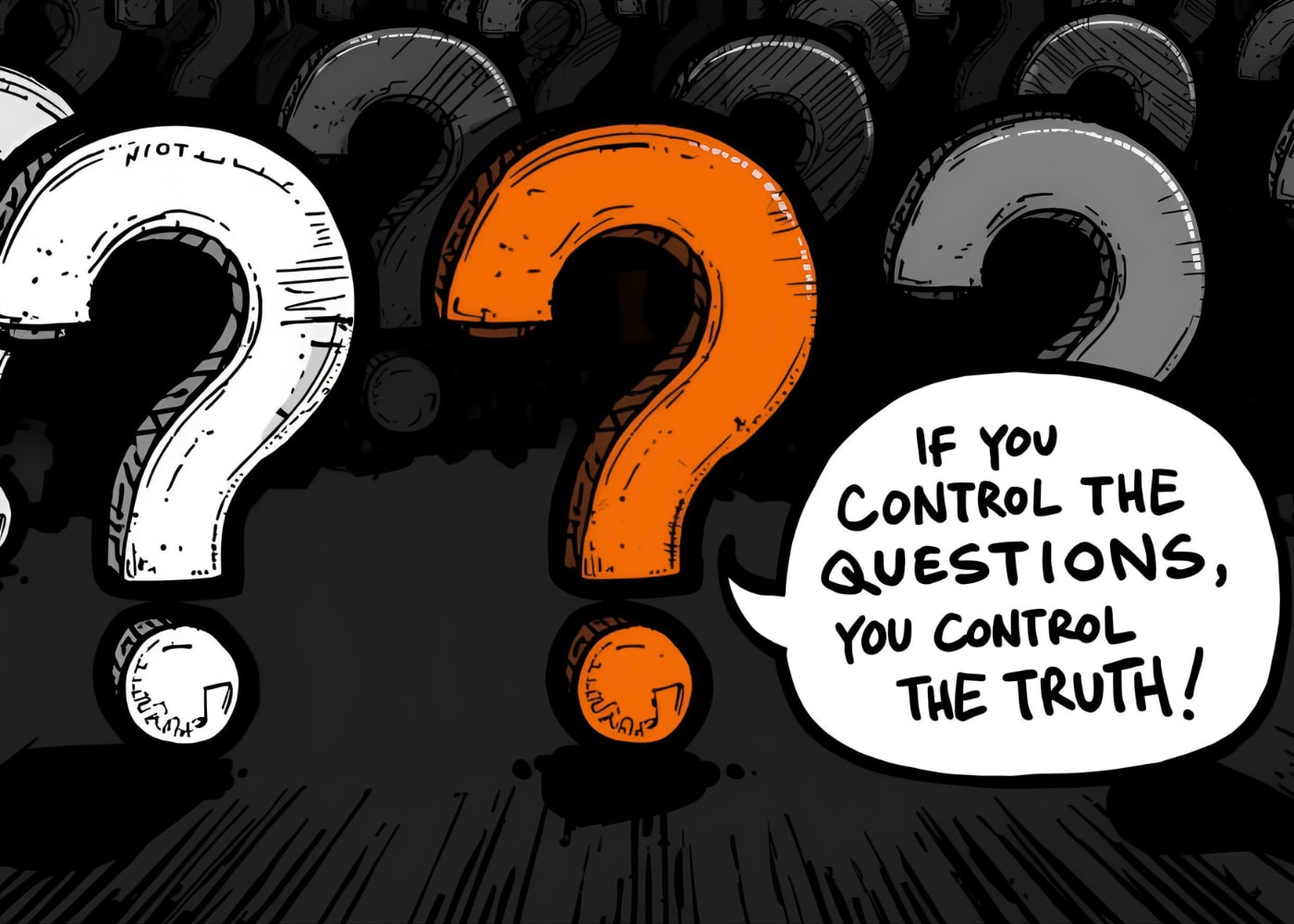
There’s a superpower that politicians, reporters, and even your friends use all the time, maybe without even knowing it: If you control the questions, you control the truth.
It sounds like a mind trick, and in a way, it is. Questions set the stage for answers. They build the box, and the conversation has to happen inside that box. By asking the question, you get to be the one who builds the box.
The Spotlight Trick
Imagine a huge, dark stage. The whole, complicated truth about a topic is somewhere on that stage. A question is like a single spotlight. It shines a bright light on one tiny part of the stage, while the rest stays in the dark.
The person holding the spotlight decides what the audience gets to see.
This is called framing. The question you ask “frames” the conversation. For example:
Question A: “Why is our school’s unfair dress code so strict?”
This question automatically frames the dress code as “unfair” and “strict.” The conversation is now stuck on why it’s bad, not if it’s bad.
Question B: “What are the goals of our school’s dress code?”
This question is more open. It lets you talk about safety, creativity, fairness, and whether the dress code is actually working or not.
The “truth” you find from Question A is that the dress code is a problem. The “truth” from Question B could be anything! The person who asked the question chose which path you’d go down.
Where You See This Mind Trick Every Day
Once you know what to look for, you’ll see this everywhere.
On Social Media & the News 📱 YouTube titles and news headlines are often questions designed to frame a story.
“Will the Mayor’s New Plan Destroy Small Businesses?” This headline frames the plan as dangerous from the start.
“Could the Mayor’s New Plan Help Local Shops Grow?” This one frames the exact same plan as something helpful. The headline you read controls your first impression before you even know the details.
In Politics 🏛️ Have you ever heard a debater ask a “gotcha” question like, “When did you stop making bad decisions for our country?” This is a loaded question.
It’s a trap!
It assumes they were making bad decisions, and forces them to defend themselves instead of talking about their actual ideas.
Even at Home 🏡 Think about the difference between these two questions from a parent:
“Why is your room always such a mess?” (This frames you as a messy person and starts an argument.)
“What can we do to make it easier to keep your room clean?” (This frames it as a problem you can solve together.)
The Most Powerful Trick: The Unasked Question
Sometimes, the most powerful way to control the truth is by not asking a question at all.
When a big company brags about how much money it made, a reporter might not ask, “…but how much pollution did your factories create?”
When your friend shows off their brand new, expensive phone, you might not ask, “…but did you have to quit the soccer team and get a job to pay for it?”
Ignoring a question is a way of pretending that part of the story doesn’t exist. It creates a “truth” that’s missing a huge piece of the puzzle.
So, What Can You Do? Be a Detective.
You don’t have to fall for this trick. Now that you know the secret, you have the power to see what’s really going on.
Listen for the Frame: When you hear a question, ask yourself: What does this question want me to focus on? What box is it trying to put me in?
Think About What’s Missing: What is the spotlight not showing you? What important questions are not being asked?
Ask Your Own Questions: Don’t just accept the question you’re given. Flip it around. Ask a better, more open question to see the bigger picture.
By learning to spot how questions shape reality, you can step outside the spotlight and find the whole truth for yourself.