

The “Both Sides” Scam: Why You’re Exhausted by the News (And How to Fix It)


You’ve seen it a dozen times. You’re watching a news segment. On one side, a climate scientist with a PhD and three decades of peer-reviewed research calmly presents a wealth of data. On the other hand, a political pundit, armed with a talking point, says, “Well, the models are unproven, and we have to consider the economy.”
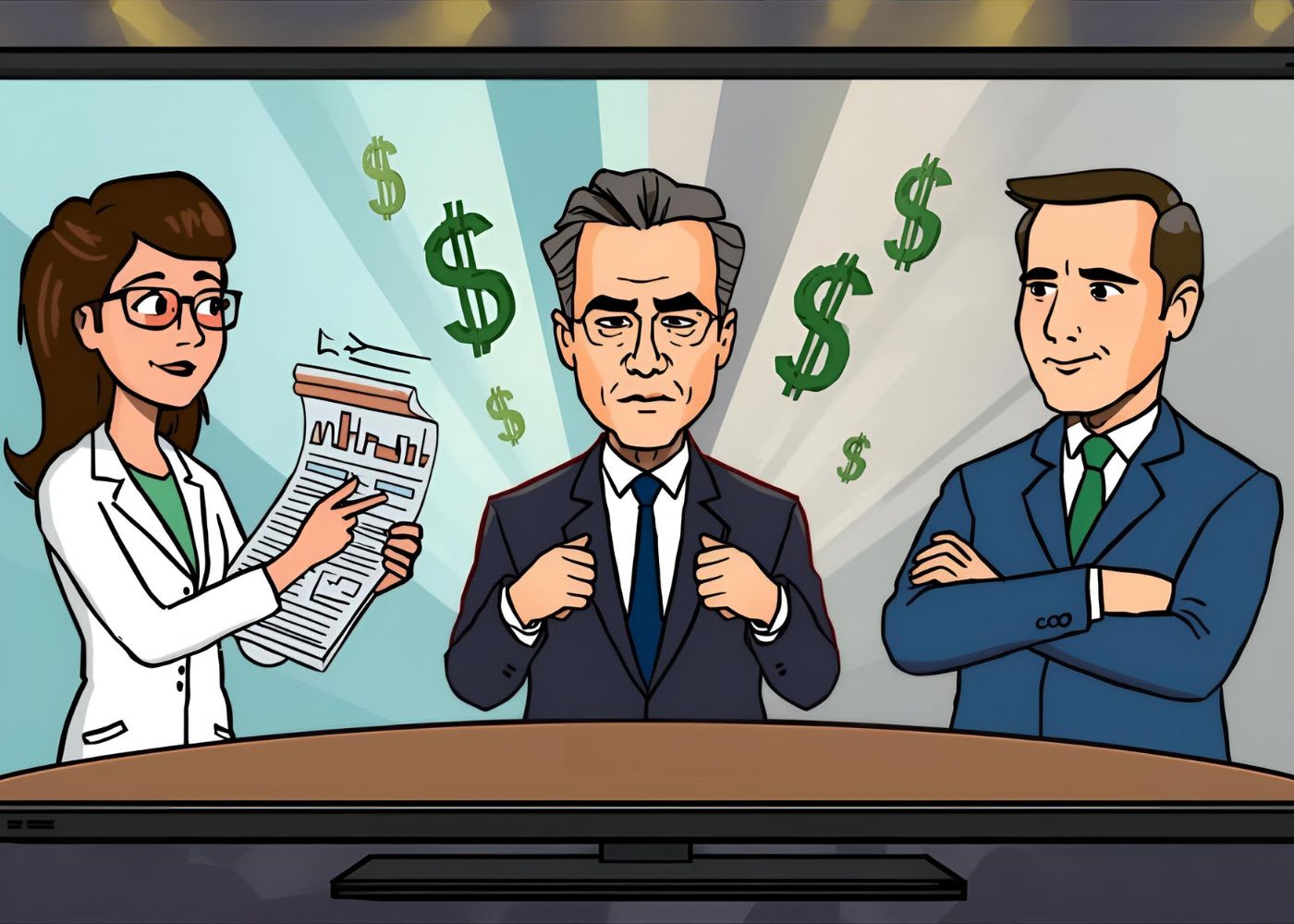
The anchor nods gravely and concludes, “A fascinating debate. We’ll let our viewers decide, right after this commercial break.”
This conversation isn’t journalism.
It’s a performance.
And for anyone genuinely trying to understand the world, it’s exhausting. It’s a fog machine, deliberately deployed to make you feel cynical, to make you believe that the truth is unknowable, and to encourage you to check out and disengage.
This tactic isn’t “fairness” or “balance.” It’s a logical fallacy called false equivalence, and it’s one of the most effective tools of misinformation. This guide is your tool to see right through it.
Naming the Threat: What Is False Equivalence?
At its core, false equivalence is a fallacy. It presents two opposing arguments as if they are equally valid, even when a substantial body of evidence supports one side and not the other.
It’s the lazy assumption that the truth must lie somewhere “in the middle.” But if one side argues that 2+2=4 and the other argues 2+2=10, the “middle” position (that 2+2=7) is just as wrong as the fringe one.
To be clear, this isn’t an argument against hearing different viewpoints. The Swansonium Institute builds on rigorous inquiry, which includes appreciating different perspectives.
But there is a crucial difference between Perspective and Reality.
Perspectives are how we interpret facts and what we choose to prioritize. Reality is the facts themselves.
We should debate policy, which is a matter of opinion and values (e.g., “What is the best policy to combat climate change? A carbon tax or green tech subsidies?”).
We should not “debate” verifiable facts as if they are opinions (e.g., “Is human-caused climate change real?”).
False equivalence deliberately blurs this line, and the “how to think” media consumer needs to be able to spot it.
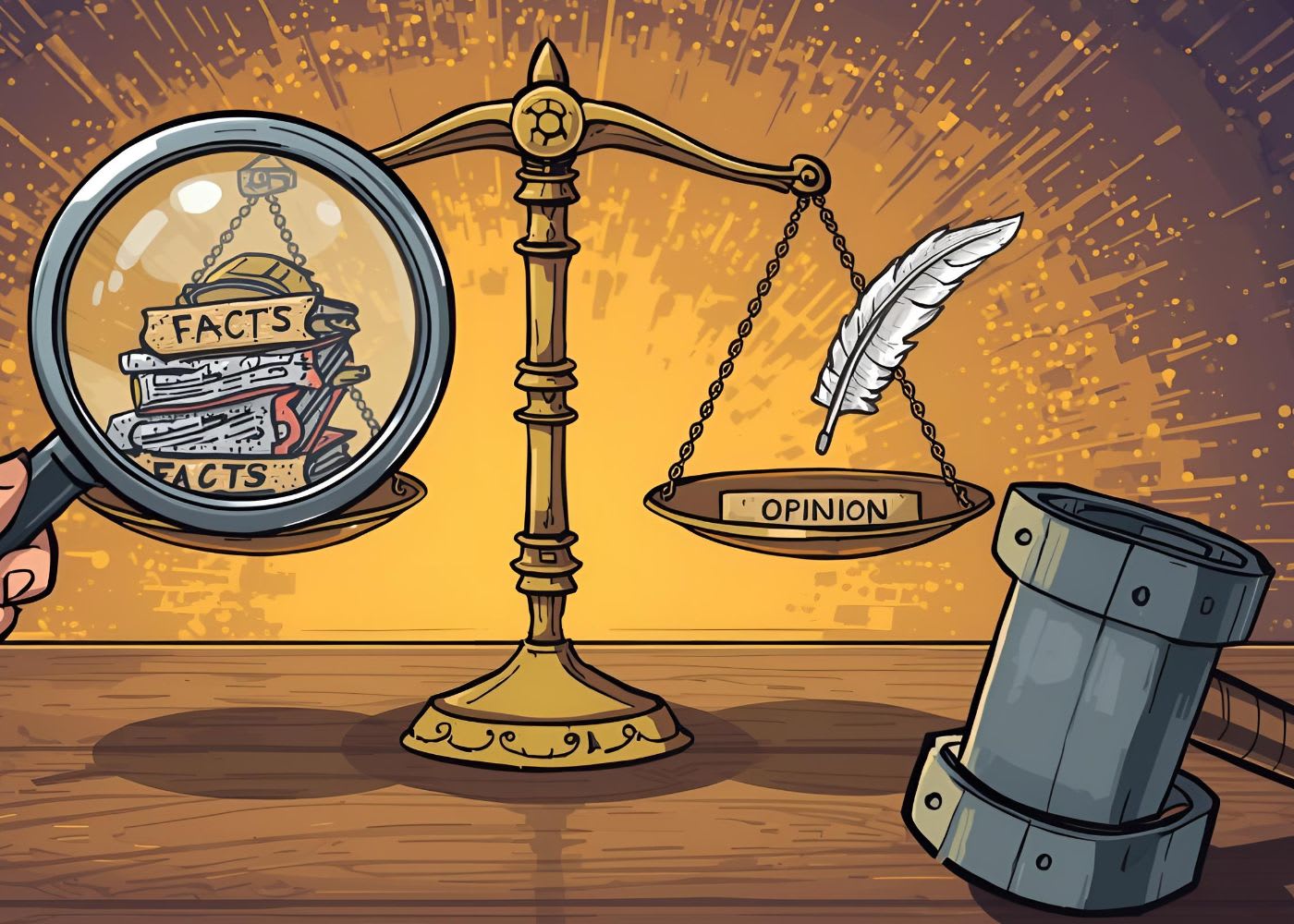
Your Toolkit: A 4-Point Guide to Spotting the Fallacy
Start with your hammer. Use these four tests to shatter the myth of “both sides” when you see it.
1. The ‘Weight of Evidence’ Test
The Question: Are they comparing a consensus to an anecdote?
The Red Flag: You’ll see a panel “balancing” the overwhelming consensus of 99% of the world’s climate scientists against one lone, often industry-funded, “skeptic.” A single, unverified story is not data. Giving a paid dissenter equal time doesn’t create a “side”; it’s propaganda.
2. The ‘Moral Asymmetry’ Test
The Question: Are they equating vastly different scales of harm or action?
The Red Flag: This is the classic “both sides are bad” trap. The media ‘balances’ a politician caught in a massive, systemic corruption scandal against an opponent who once had an unpaid parking ticket. Pundits equate a protester who spray-paints a slogan on a wall with a state policy that systematically disenfranchises thousands. This tactic is designed to make the larger transgression seem trivial and encourage your cynicism.
3. The ‘Expertise vs. Opinion’ Test
The Question: Are they confusing having an opinion with being an expert?
The Red Flag: A network gives a celebrity the same platform to “debate” global economics as a Nobel Prize-winning economist. A cable news host offers “his take” on a complex legal ruling as if it holds the same weight as a constitutional scholar’s. Remember the bedrock principle of this Institute: You are entitled to your own opinion, but you are not entitled to your own facts.
4. The ‘Motive for Conflict’ Test
The Question: Is the goal of the segment to inform or to inflame?
The Red Flag: Watch the anchor’s questions. Are they, “How do you know that?” and “What is your evidence?” Or are they, “Senator, your opponent says you’re a liar. How do you respond?” Conflict gets clicks. “Balance” is often just a cover for manufacturing a fight, and you are the product being sold.
Why This Matters
Platforming falsehoods without pushback isn’t a harmless media quirk. The tobacco industry used this exact strategy for decades. They manufactured a “debate” about the dangers of smoking by paying their own “scientists” to create a false equivalence. Their more profitable product was doubt. That doubt cost millions of lives.
Today, this same tactic paralyzes action on our most critical issues by creating a “controversy” where none exists. It gives policymakers an excuse to do nothing. It also silences the oppressed by equating their legitimate calls for fundamental rights with the “discomfort” of those in power.
From Cynical to Clear-Eyed
So yes, you are right to be exhausted. Your cynicism isn’t the problem; it’s a symptom of a broken information system.
The antidote to this cynicism isn’t to disengage. It’s to get armed. This guide is a tool in your arsenal. Your job as a citizen is not to find the “middle” between fact and fiction. Your job is to find the truth.
The Swansonium Institute is your partner in that pursuit.
Put It Into Practice
What’s the most blatant example of false equivalence you’ve seen this week? Share it in the comments and walk us through which test exposes it. Did they equate consensus with anecdote? Confuse expertise with opinion?
This is how we get sharper—by practicing on real examples, not theoretical ones. Your media diet is full of this fallacy. Let’s start naming it.